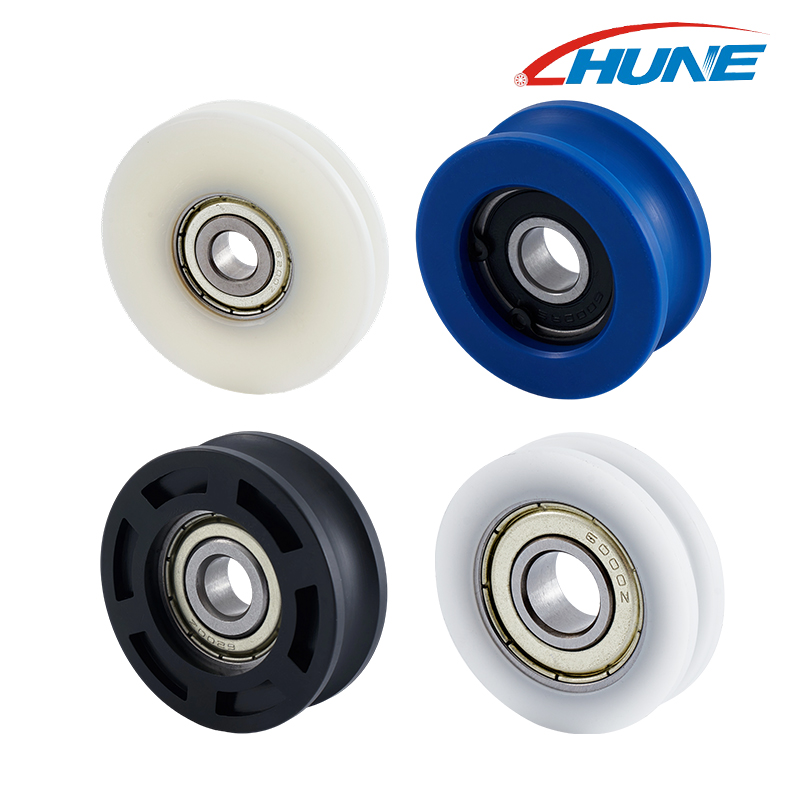


Retractable awning systems can look fairly simple from the outside, but the movement underneath the fabric depends on a number of mechanical parts working together. In some designs, the fabric rolls onto a tube and articulated arms control the extension. In track-guided structures, the movement can be handled differently, with carriages and roller wheels travelling along fixed rails.
That difference matters when talking about awning rollers. A wheel used inside a guide track is not simply there to carry weight. It also needs to follow the track, keep the carriage in position, and allow the moving section to travel without unnecessary resistance.
The actual design varies from one awning system to another, so there is no single wheel configuration that suits every application. Track shape, carriage construction, wheel material, bearing arrangement, installation method, and outdoor conditions all have a role in the final design.
Where Are Roller Wheels Used In A Retractable Awning?
Roller wheels are commonly associated with retractable structures that use guide tracks or rails.
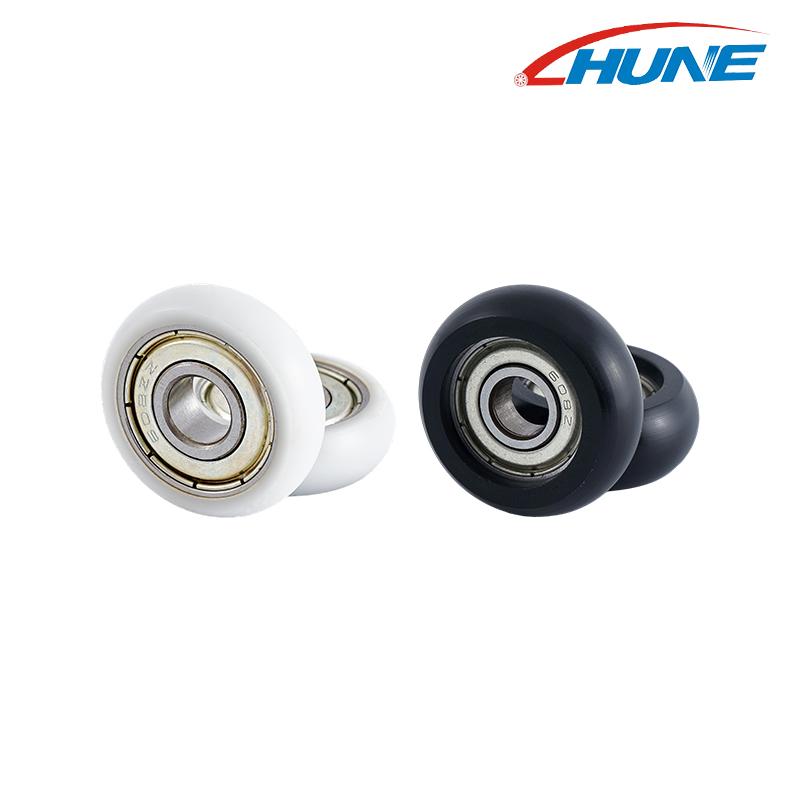
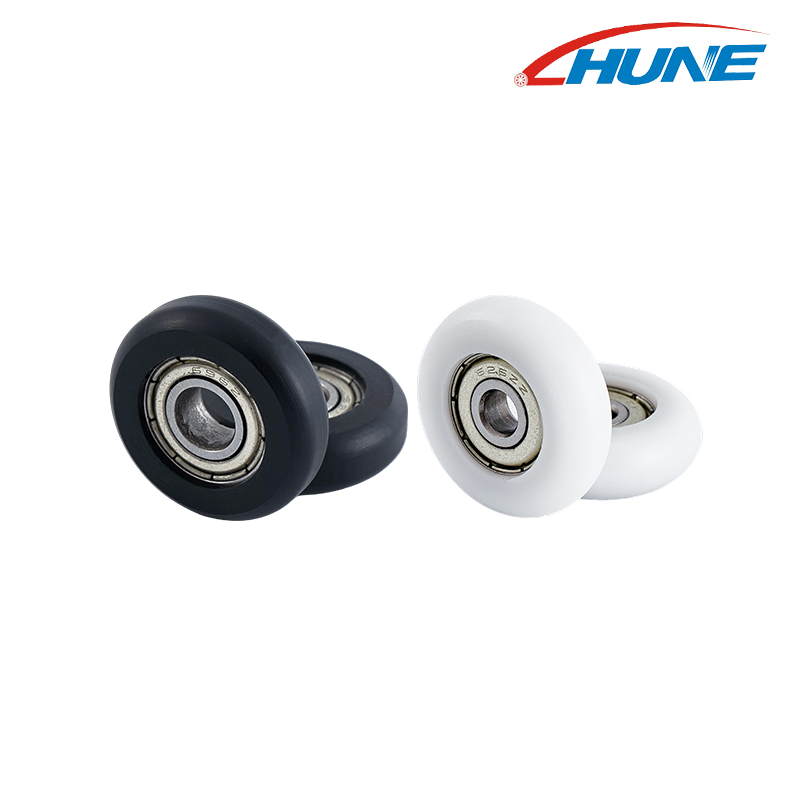
In this type of arrangement, a moving carriage is connected to part of the awning frame. The carriage contains one or more wheels that run along the track as the structure opens or closes. Depending on the design, the wheels can provide vertical support, lateral guidance, or both.
The wheel is therefore part of a larger mechanical connection:
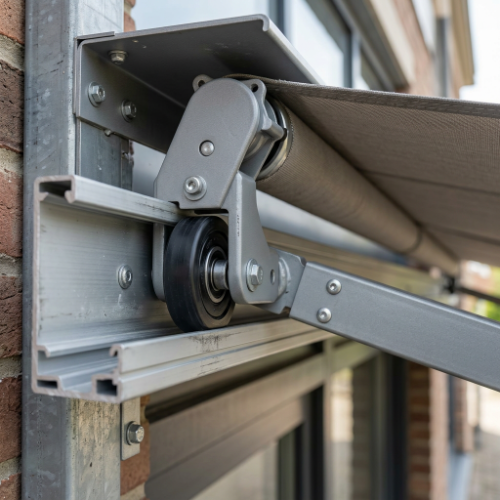
Moving Frame → Carriage → Wheel → Guide Track
The operating system creates the movement, while the carriage and wheels keep that movement within the intended path.
Track Guided And Roller Tube Systems Are Different
It is useful to separate two common concepts.
A conventional retractable patio awning often uses a roller tube to collect the fabric. The supporting arms extend and fold as the awning moves.
A track-guided canopy uses rails to control a moving section. The frame or carriage travels along those rails, and roller wheels provide the rolling interface.
Both systems can be described as retractable awnings, but their component requirements are different. A supplier therefore needs to understand the actual mechanism before recommending a replacement or developing a new wheel.
Why Do Some Awning Structures Use Roller Wheels?
The main reason is controlled movement.
When a carriage slides directly against a guide surface, the two surfaces remain in contact while one moves across the other. A roller changes this relationship. The wheel rotates as the carriage travels, creating rolling contact with the rail.
The amount of resistance in a real system depends on more than the wheel. Track condition, wheel material, load, bearing construction, alignment, surface finish, and contamination can all influence movement.
For an outdoor canopy that is opened and closed repeatedly, these details become part of the overall mechanical design rather than an afterthought.
The Wheel Is More Than A Support Point
A wheel inside a carriage can have several jobs at once.
It can carry part of the structure, keep the carriage moving along the rail, and help control sideways movement. In some assemblies, separate wheels may perform different functions.
This is why the wheel profile and mounting position should be considered together with the track.
How Does The Track Shape Affect The Wheel?
The track is one of the first things to examine when selecting a roller wheel.
A flat rail, grooved rail, raised guide, or enclosed channel creates a different contact condition. The wheel needs to sit correctly against the running surface without excessive looseness or interference.
| Track Style | Wheel Consideration |
|---|---|
| Flat running surface | Running surface shape and contact area |
| Grooved rail | Matching groove or guide profile |
| Raised guide | Lateral guidance and wheel edge |
| Enclosed track | Wheel clearance and carriage space |
| Curved section | Wheel movement and carriage geometry |
Wheel Profile And Contact
The profile controls how the wheel meets the track.
A mismatch can result in uneven contact. The wheel may move sideways, rub against an unintended surface, or place additional pressure on one section of the rail.
For a replacement component, this is one reason a physical sample can be more useful than a product photograph. Two wheels may look similar while having different running surfaces or mounting features.
Why Side Guidance Matters
Outdoor awnings can experience changing forces during operation. Fabric tension, frame movement, and wind can influence the forces acting on a carriage.
The guide system needs to keep the moving section within its intended path. Depending on the design, this may be achieved through wheel flanges, grooves, multiple wheels, or the shape of the track itself.
There is no universal solution. The wheel and rail need to be treated as a matched interface.
How Does A Carriage Work With The Wheels?
The carriage is the connection between the moving structure and the roller wheels.
It determines where the wheels sit, how the axle is supported, and how the load reaches the track. A wheel can be correctly manufactured but still perform poorly if the carriage places the axle at an unsuitable angle or position.
Wheel spacing is another consideration.
When several wheels are installed in one carriage, their position affects how the load is shared. It also influences how the carriage behaves when it enters or leaves a section of track.
Why Wheel Spacing Can Matter
Imagine a carriage with several rolling points. If the load is not distributed as intended, one wheel may experience greater contact pressure than another.
This can influence wear and movement resistance.
For that reason, wheel development for an OEM project often benefits from reviewing the carriage drawing rather than looking at the wheel alone.
What Materials Are Used For Awning Roller Wheels?
There is no single material suitable for every outdoor rolling application.
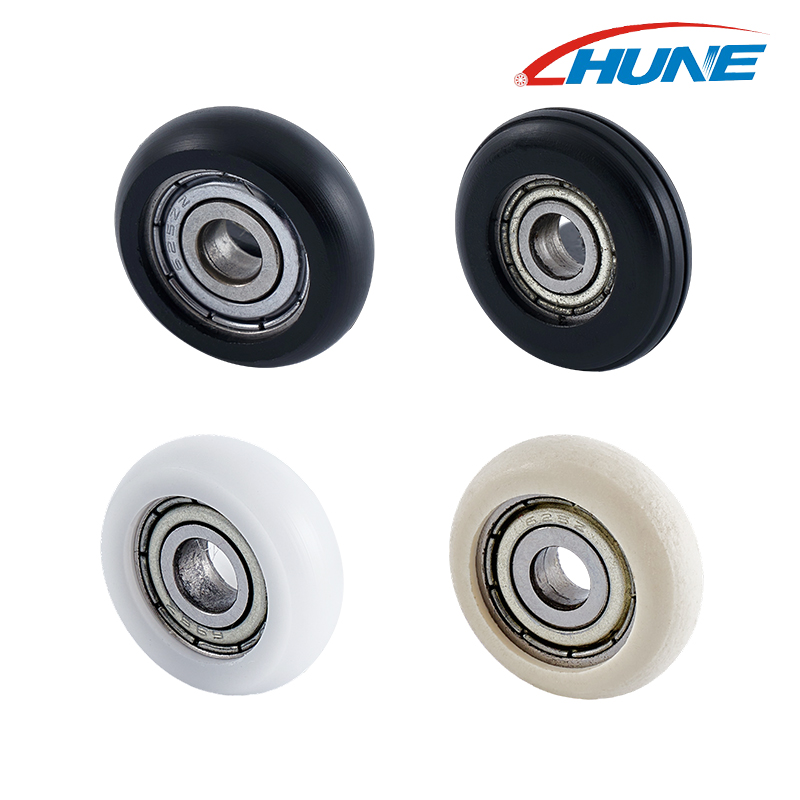
Polymer materials are often considered for wheels where a relatively quiet running interface and resistance to outdoor exposure are useful. Different polymers have different mechanical and environmental characteristics, so the choice depends on the actual working conditions.
Metal wheels can be appropriate for applications that call for a rigid rolling element or a particular construction. In outdoor environments, corrosion resistance and surface treatment then become relevant.
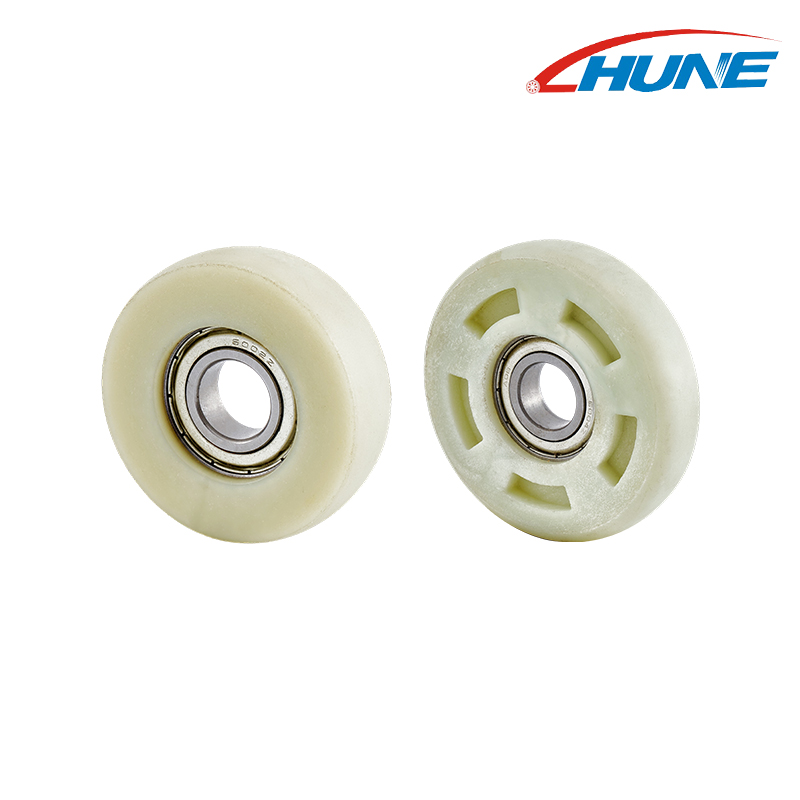
The choice can also involve more than the wheel body. A polymer wheel, for example, may contain a metal bearing or axle.
Polymer Wheels
Material selection should take account of factors such as:
- Expected load.
- Track material.
- Temperature conditions.
- Moisture exposure.
- Movement frequency.
- Surface contact.
- Bearing arrangement.
A polymer selected for an indoor guide should not automatically be assumed to behave the same way outdoors.
Metal Wheels
Metal construction can provide a different mechanical response and may be appropriate for particular track arrangements.
For outdoor use, the surrounding environment needs to be considered. Moisture and corrosive exposure can influence material and surface treatment decisions.
The appropriate solution depends on the complete assembly rather than the wheel material by itself.
What Does The Bearing Do Inside The Wheel?
The bearing or bushing provides the rotating connection between the wheel and axle.
A wheel needs to turn as the carriage travels. If the rotating interface develops excessive resistance, the movement of the entire carriage can be affected.
Bearing selection depends on factors such as load, operating conditions, available space, wheel construction, and exposure to the environment.
The axle also deserves attention. If the axle is not aligned correctly, the wheel can experience uneven loading even when the bearing itself is suitable.
Bearing And Outdoor Conditions
Outdoor awning components can encounter dust, moisture, and temperature changes. If the rotating assembly is exposed, the bearing arrangement should take those conditions into account.
This is one reason a wheel should not be specified only by outside diameter or appearance. The internal construction can be just as important to the application.
Why Does A Retractable Awning Wheel Become Noisy?
Noise does not always mean that the wheel itself needs to be replaced.
A rough track surface, debris, a loose axle, misalignment, bearing wear, or wheel damage can all change the sound produced during movement.
The location of the noise can provide a useful clue.
If the sound occurs throughout the entire travel path, the wheel or rotating assembly may deserve attention. If it appears at one particular section, inspect the corresponding part of the rail. If the sound occurs when the carriage changes direction, the mounting and wheel arrangement may need to be checked.
Common Symptoms And Possible Causes
| Symptom | Areas To Inspect |
|---|---|
| Rough travel | Wheel, track, bearing |
| Repeated clicking | Axle, mounting, carriage |
| Side movement | Wheel profile, track alignment |
| Noise at one location | Local track condition |
| Increased resistance | Debris, bearing, wheel surface |
| Visible wheel damage | Wheel and axle assembly |
These observations do not replace a proper inspection, but they can help identify where to start.
Can Dirt And Debris Affect Roller Wheels?
Yes. Outdoor guide tracks are exposed to the surrounding environment.
Dust, leaves, pollen, insects, and other debris can collect inside a track. When the material reaches the wheel contact area, it can interfere with movement or change the way the wheel sits against the rail.
The problem can become noticeable gradually. The awning may still move, but the carriage may feel heavier or produce intermittent noise.
Cleaning The Guide Track
Cleaning should focus on the areas where debris can accumulate, including grooves and enclosed sections.
The maintenance method should follow the equipment manufacturer's recommendations. Some systems do not require lubricant on the wheel running surface, and adding grease or oil can attract additional dust.
If cleaning does not resolve the problem, the wheel, bearing, carriage, and track should be inspected for mechanical issues.
How Important Is Track Alignment?
Alignment is easy to overlook because it is not always visible when the awning is operating.
A wheel needs to travel in the direction established by the rail. If the track is incorrectly positioned, the carriage may place additional lateral force on the wheel.
This can result in uneven movement or localized wear.
Track alignment and wheel condition should therefore be checked together when a retractable structure develops a movement problem.
A Wheel Cannot Correct Every Track Problem
Replacing a wheel may not solve the issue if the rail itself is bent, contaminated, or incorrectly installed.
The same principle applies in reverse. A clean and correctly aligned track cannot compensate for a wheel with a damaged running surface or unsuitable profile.
Looking at the complete guide assembly usually gives a clearer picture.
Does Load Distribution Change During Operation?
It can.
A moving awning frame does not necessarily transfer the same forces to every wheel throughout its travel. The position of the frame, fabric tension, wind conditions, and carriage geometry can influence the load.
When several wheels are used, their spacing and position help determine how those forces are shared.
This is particularly relevant for custom roller wheel development because the component should correspond with the actual load path rather than being selected from general size information.
Simplified load path:
Frame → Carriage → Axle → Wheel → Track → Supporting Structure
Each part contributes to the movement of the complete assembly.
When Is A Custom Roller Wheel Needed?
A standard wheel can be suitable when an existing track and carriage already correspond with an established component.
Custom development becomes more relevant when the system has a special rail profile, unusual mounting arrangement, particular material requirements, or a replacement wheel that is no longer readily available.
For a new OEM system, custom development can also allow the wheel, carriage, and track to be considered together during the design stage.
What Information Helps With Custom Development?
A manufacturer may need some combination of:
- Existing wheel sample.
- Track sample.
- Technical drawing.
- Carriage drawing.
- Axle information.
- Material requirements.
- Bearing requirements.
- Operating environment.
- Inspection requirements.
A physical sample can be especially useful for replacement projects because it shows the actual relationship between the wheel and surrounding components.
How Does A Roller Wheel Go From Sample To Production?
The development process depends on the product, but it generally starts with understanding the application rather than immediately producing a replacement.
The existing component or drawing is reviewed, followed by an examination of the track and mounting arrangement. Material and wheel construction can then be considered.
Depending on the design, production may involve molding, machining, forming, assembly, or surface treatment.
A typical project may move through these stages:
- Application review.
- Sample or drawing evaluation.
- Wheel and track interface review.
- Material selection.
- Tooling or process development where required.
- Sample production.
- Customer evaluation.
- Final production and inspection.
The exact process varies according to the component structure and project requirements.
What Should Buyers Check Before Ordering?
A product image alone may not provide enough information to identify a compatible wheel.
Before ordering, buyers can check the track profile, wheel shape, mounting arrangement, axle relationship, bearing construction, and operating environment.
For replacement projects, comparing the existing wheel with the track can prevent a common problem: selecting a component that appears similar but does not match the actual guide system.
A Simple Purchasing Checklist
Before sending an inquiry, consider:
- What type of retractable structure is involved?
- Does the system use a guide track?
- What does the existing wheel run against?
- How is the wheel mounted?
- Is there a bearing or bushing?
- What material is currently used?
- Is the application exposed to moisture or dust?
- Can a sample or drawing be provided?
This information gives a component manufacturer a much clearer starting point.
What Should Distributors Consider?
Distributors handling awning components may deal with several wheel designs that look similar but are not interchangeable.
Maintaining clear product identification can help avoid confusion between different track profiles or mounting arrangements. For repeat orders, an approved drawing or product reference can also make future communication easier.
Packaging and labeling may matter as well, particularly when several similar components are being supplied for different awning systems.
For replacement parts, keeping the application reference with the component information can be useful throughout the purchasing process.
How Hune Pulley Handles Custom Roller Wheel Projects
Hune Pulley works with customers on pulley and roller component requirements, including applications where the wheel needs to correspond with a particular guide or carriage structure.
For retractable awning projects, the development process can begin with an existing roller, track sample, technical drawing, or related assembly information. Reviewing these parts together helps establish the wheel profile, mounting arrangement, material, and internal construction required for the application.
Depending on the project, production may involve molding, machining, assembly, inspection, and other manufacturing processes. The actual route is determined by the approved component design and customer requirements.
This application-based approach is particularly useful for OEM and replacement projects where compatibility with an existing mechanical system is important.
Why The Wheel Should Be Viewed As Part Of The System
A roller wheel may be a small component compared with the frame and fabric of a retractable canopy, but it sits directly between the moving carriage and the guide rail.
Its profile affects contact with the track. Its material affects the running interface. Its bearing or bushing affects rotation. Its axle position affects alignment, while the carriage determines how forces reach the wheel.
That is why wheel selection is better approached as a system question rather than a simple hardware purchase.
For a replacement component, the existing wheel and track provide valuable information. For a new OEM project, the carriage and guide structure can help define the wheel from the beginning.
Roller wheels are an important part of track-guided retractable awning and canopy systems. Their job can involve supporting a moving structure, guiding a carriage along a rail, and maintaining controlled contact between the movable and stationary parts of the assembly.
The wheel itself is only one part of that relationship. Track profile, carriage geometry, wheel material, bearing construction, axle alignment, load distribution, and outdoor conditions all influence how the guide system behaves.
When sourcing a replacement or developing a new component, starting with the actual application can make the process much clearer. A wheel sample, track section, drawing, or carriage reference can provide useful information that a simple product description cannot.
For manufacturers and buyers working with guided awning structures, the practical question is not simply whether a roller wheel can fit into a system. The more useful question is whether the wheel, track, carriage, and mounting arrangement have been developed to work together. That relationship is what ultimately determines how the moving structure behaves during everyday use.